The DiversIT initiative is a CEPIS flagship initiativeuniting organisations, experts, and practitioners committed to accelerating gender equity in technology. We empower companies, associations, and policy makers through knowledge-sharing, community building, and joint visibility — creating real momentum for women in tech across Europe.
Technology is a growing field and advanced digital skills are at a premium. Women make up less than 20% of the workers in ICT professions, yet they consistently make up nearly half of the available workforce. In addition, having a diverse team increases productivity, profitability, and innovation potential
DiversIT Certification
The DiversIT Certification is a recognition designed to promote and validate the efforts of companies and organisations that work towards improving gender equality in the tech professions. It helps organisations assess their efforts in fostering an inclusive workplace and supporting women in tech. Achieving this certification demonstrates a company’s commitment to diversity and its dedication to creating a more equitable tech industry.
The certification has three levels of attainment:
Bronze: for organisations that have taken initial steps toward promoting women in tech by implementing basic policies and practices.
Silver: for companies that demonstrate measurable progress in fostering an inclusive workplace with structured women in ICT/DEI initiatives.
Gold: for organisations that exemplify best practices in diversity, equity, and inclusion, serving as industry leaders in DEI commitment and impact.
Show to external stakeholders that you have the right values and sensibilities
Demonstrate your compliance with workplace diversity standards (required in many countries for business processes such as participating in tenders or reporting to national authorities)
Strengthen the “S” and “G” in ESG by promoting diversity, equity, and inclusion, ensuring fair governance and social responsibility
Make your workplace better and more inclusive
Become a part of the ever-growing international DiversIT Community: share experience, learn from each other, build connections, get priority access to our events
Be able to showcase your organisation and best initiatives at our events and through our communications channels
Allied membership
If you are an organisation working with gender equality/diversity in tech, we would love for you to join as Allied member! Together, we can reach a broader community, especially since we are a pan-European network, thus increasing the effectiveness of your and our actions. In addition, we can pool our knowledge to develop better actions to promote gender equality and diversity in tech.
As an Allied member, you will have a number of benefits, such as privileged access to our events and workshops, a chance to consult our expert pool for advice and guidance, and a 10% discount on the assessment fee for the DiversIT Charter Certificate, if you decide to apply for the certification.
If you’re interested in joining our network as Allied member, please contact us at info@cepis.org.
The DiversIT Charter is a network of diversity-conscious businesses and organisations who truly care about equality in tech.
The DiversIT Charter is an initiative of the CEPIS Women in ICT expert group. Coming from different CEPIS Member countries, the members are a group of experienced and knowledgeable experts, thoroughly committed to promoting gender equality in ICT profession.
Petra is the Founder and CEO of the Slovak NGO “AJ Ty v IT” (“You in IT, also”), Chair of the CEPIS Women in ICT expert group and Member of the Board of the American Chamber of Commerce in Slovakia. Petra is actively involved in education and the transformation of education in Slovakia. She was chosen as the Female Role Model of the Year 2018 in Slovakia, awarded by CESA Award and the winner of the Women in TECH Inclusion Award 2020, awarded by the Department of International Trade of the British Embassy, challenging and empowering young girls and women in TECH fields.
Marina is a computer consultant who for a long time has been involved in the development of many EDCL/ICDL and informatics certifications both in Italy and internationally, being a part of many expert workgroups. She also takes care of the Italian localisation of the material related to such certifications, and she is responsible for quality assurance of the training material and the tests used for the certifications in Italy. Marina belongs to the Board of Directors of CEPIS, and to the CEPIS Women in ICT group in her capacity as Deputy Chair. She is very committed to increase the presence of women in STEM, and plays an important role in the development of the DiversIT Charter.
Edna Kropp holds a degree in computer science and has worked in IT for many years in various roles in both research and industry. As Head of Product Management at vier.ai, she is responsible for the development of a SaaS solution that efficiently automates complex customer service processes. She has already successfully founded several networks within IT companies and initiatives in the IT community to strengthen women in IT. At the German Informatics Society, Edna Kropp is on the Economic Advisory Board and on the extended management committee of the Women and Informatics specialist group. She has been the spokesperson for the section for the last 3 years and was recently honored by Federal President Steinmeier in recognition of her commitment.
Arnheiður has been in the IT sector since 1986, starting out as a programmer at the National Hospital and going on to become a Project Manager and Managing Director of Software Development in Skýrr, one of the biggest IT companies in Iceland. Now she leads Ský, the Icelandic Computer Society, a non-profit association of IT professionals. She is also the initiator and Managing Director of the „UTmessan“ project, one of the biggest annual IT events in Iceland. Arnheiður holds a degree in Applied Computer Sciences from Denmark and an MBA from the University of Iceland. She is also a long-standing leading member of the CEPIS Women in ICT Task Force.
Priska is Group CEO at wikima4. She has been working in the fields of information security, data privacy, process optimization and international trading marketing for almost 20 years and specialises in analysis, development and realisation of operational Risk Management and IT-Governance, among others. In her international assignments, she has learned many languages and is acquainted with the cultures and working mentalities of these countries. The major topics that she was engaged as SI Board member include the diversity aspects in IT throughout the whole carrier: from girls in coding to senior female management as well as increasing IT know-how among young people.
Raquel Lacuesta Gilaberte (ATI, Spain)
Raquel received her PhD degree in Computer Science Engineering from the Polytechnic University of Valencia in 2008. She has been a lecturer and researcher at the Engineering and Computer Science Department at Zaragoza University for more than 20 years. She has (co-)authored almost 100 scientific papers, published in national and international conferences and research journals. Raquel has been involved in several important program committees of international conferences and has been principal researcher of more than 10 research projects with government and private companies. She has participated in Zaragoza University programs such as The Girls’ Day with the Association of Women Researchers and Technologists, and is also a part of the CEPIS Women in ICT expert group.
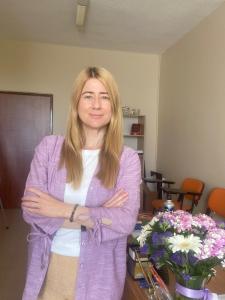
Dr. Duygu Özalp is an Assistant Professor of Sociology at Başkent University since 2021, specializing in the sociology of work, management, technology, and innovation. She coordinates student internships and advises on digital transformation. Holding dual bachelor’s degrees and a PhD focused on Türkiye’s aerospace industry, she has presented extensively at conferences and is active in several sociological associations, as well as the Informatics Association of Turkiye.
Skevi is a US graduate majoring in Information Systems. She has extensive experience in ICT in international business in insurance, airlines, shipping and other industries. As a team leader she successfully mentored and supported women. She also actively promotes and supports ICDL certification. Skevi has long been involved in promoting women in IT in Cyprus, as a member of the Board of the Cyprus Computer Society, through the CEPIS Women in ICT Task Force and through organising and supporting projects, conferences and events. She is actively involved in developing the DiversIT Charter.
Gyöngyi is an Associate Professor at the Department of Computer Science at the Faculty of Informatics at the University of Debrecen in Hungary. She worked as a database programmer, web developer and designer. Gyöngyi is responsible for CS teacher training at the UD. She is also the e-learning coordinator of the faculty. She is the founder and the leader of the Women in Informatics Communication, Education and Research Area chapter of NJSZT and works in many project involved in women in CS. She is a member of IEEE, ACM, and ISACA. She holds degrees, a Ph.D. and a habilitation in Computer Science and Mathematics from University of Debrecen, Eötvös Lorád University Budapest and Savoy Mont Blanc University, Chambéry.
Sabine works as Patent Attorney at Schwarz & Partners. Her past career includes working as Patent Examiner at the East-German Patent Office and at the Institute of Informatics. In 1992 she joined the European Patent Office, first as Patent Examiner and then as Director in the field of computing. Sabine has co-authored two books on the protection of software by patents. As a member of the German Society of Informatics, she was active as deputy speaker of the Women in Digital group. Sabine is a member of IEEE, ACM, and GChACM. She holds a degree in automation technology from Technische Universität Dresden.
Dr. Styliani Kleanthous is an Assistant Professor in Human – AI Interaction, at the Open University of Cyprus. She holds a Ph.D. in Computer Science from the University of Leeds, UK and an MSc. in Information Systems from the University of Salford, UK. Styliani’s main expertise and interests fall into the area of Human – AI Interaction. Styliani is following user modeling and personalization approaches for understanding and modeling the collaboration and interaction between Humans and AI, in different scenarios with the aim of empowering humans in their everyday interactions with AI. In this line, she is also leading the development of interactive tools for collecting user interaction data and for creating awareness of the potential and limitations of AI technologies.
The Women’s Group of the German Society of Informatics will hold its annual conference from 17 to 19 April 2026 in Munich, bringing together researchers, professionals and advocates to address one of the most urgent challenges of the digital age.
A high-level conference entitled “Teachers and Career Choices in ICT and STEM” will take place on Tuesday, 3 March 2026 in Nicosia, Cyprus, bringing together educators, academics, career counselors and parents to address one of the most pressing challenges facing Cyprus and Europe: the low participation of girls in Information Technology and STEM professions.
Dr Styliani Kleanthous, Assistant Professor at the Open University of Cyprus, Co-Director of the Cyprus Center for Trustworthy AI (CyCAT), and an active member of the CEPIS Women in ICT Expert Group, continues to exemplify excellence in women’s participation and leadership in the technology sector through her impactful contributions across Europe.
A newly released Women in Digital (WiD) Index offers a comprehensive snapshot of gender equality in the ICT and digital sector across EU Member States and selected international peers. Designed as a composite indicator, the index measures women’s participation and progression throughout the digital ecosystem—from early STEM education to senior leadership roles. Unlike traditional metrics …
A new joint research project by Berliner Hochschule für Technik and HTW Berlin explores how intersectionality can unlock gender diversity in IT. By examining how factors like gender, origin, age, and career path combine to create unique barriers, the study aims to provide practical tools for making the IT industry more inclusive and equitable.
On 23 September 2025, Bratislava hosted the Women in IT Awards, organized by Aj Ty v IT, an Allied member of the CEPIS DiversIT network, celebrating three outstanding figures shaping Slovakia’s technology sector. Winners were announced in three categories: Woman in IT, IT Student of the Year, and IT Ally of the Year, underlining that technology is also about empathy, courage, and social impact.
Who can apply for the DiversIT Charter certificate?
Any legal entity may apply if they have an IT workforce. For example, a bank which has a significant workforce of technical people may want to show how they have committed to the principles within the DiversIT Charter and may want to follow the roadmaps set out in the Bronze, Silver, and Gold certifications of the Charter.
Is there a cost for Allied Membership?
Yes, the Allied Membership costs 200 EUR/year.
How do I find out if my application has succeeded?
You will be notified by email from the CEPIS office during April or October following your application so long as the application was received by the correct date. The Assessment team will notify the CEPIS office of those applicants succeeding or failing in their applications, and emails will be sent out. Where an application is a failure, the assessors will offer positive suggestions of activities which will enhance the work in the organisation, with a view to receiving a successful application from the organisation in the next round.
How long is the DiversIT Certificate valid and do I need to recertify?
Holding the DiversIT Charter status at any level identifies the organisation as one which is supporting its female technical workforce or student cohort. For this reason, it is important that organisations re-certify to ensure that women seeking work in the organisation can trust that they will be supported equally and fairly during their tenure with the organisation. As the DiversIT Charter certification becomes trusted across Europe, women will seek it out when looking for employers or looking to do business with organisations. For this reason, it is important to ensure the quality mark that the DiversIT Charter accreditations confer. Charter certificate holders will be required to recertify every 5 years. If the deadline for recertification is missed, the Charter certificate will no longer be valid until the time of successful recertification.
How do I recertify?
You should use your original application and submit it along with additional work that has been done in each subsequent year. You should verify your submission on the application form and submit in the normal way. In this way the assessors can see growth, progress against KPIs and targets and momentum for women in tech.