


The tech industry is undoubtedly a male-dominated field, but this hasn’t always been the case. In fact, historically, women played a significant role in the early development of computing. This does not imply that the sector was diverse in the modern sense, but it does illustrate how dominance in a sector can shift over time. The trajectory of women’s involvement in computing – from pioneers to an underrepresented group – offers valuable insights into the societal and structural factors that shape workforce demographics. Understanding this evolution can help guide efforts to create a more inclusive and equitable technology sector today.
Early Contributions of Women in Computing
One of the earliest and most significant figures in computing history was Ada Lovelace, who is often credited as the first computer programmer. In the 1800s, Lovelace worked alongside Charles Babbage, conceptualising how machines could go beyond simple arithmetic calculations. She envisioned the analytical engine’s potential for more complex computations, effectively laying the groundwork for modern programming. Her insights remained largely theoretical during her lifetime, but they foreshadowed the role of software in computing long before digital computers existed.
Fast-forward to the mid-20th century, and women were instrumental in computing once again. During World War II, female mathematicians, known as the “computers,” played a crucial role in codebreaking and ballistics calculations. The ENIAC (Electronic Numerical Integrator and Computer), one of the first general-purpose digital computers, was programmed by a team of six women, including Jean Bartik and Betty Holberton.
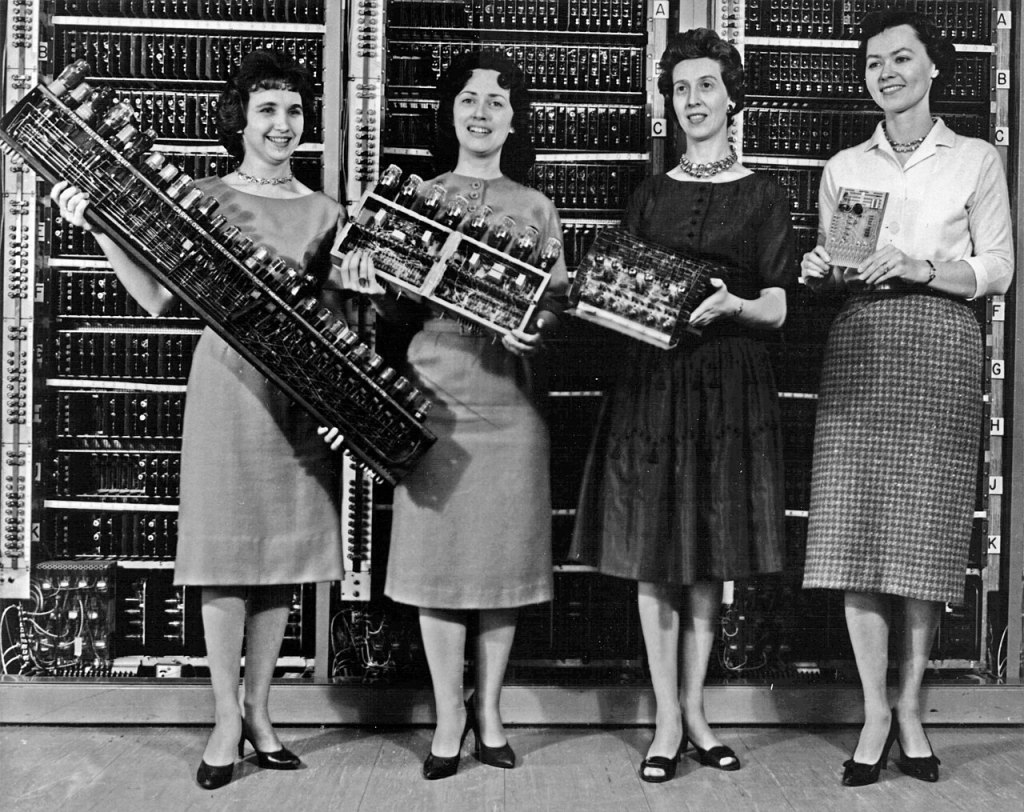
Bartik and Holberton were both mathematicians who were hired by the US Army during World War II to calculate ballistics trajectories.
They were assigned to work on the ENIAC, which was still under construction at the time. The ENIAC was a massive machine that filled an entire room, and it was incredibly complex to program. Bartik and Holberton had to learn how to program the ENIAC by reading diagrams and interviewing the engineers who built it. They developed many of the fundamental programming techniques that are still used today.
Their work was pioneering, yet it was largely unrecognised at the time. Despite their contributions, these women were often categorised as assistants rather than engineers, highlighting an early example of gender-based undervaluation in tech.
The Rise of Women in Computer Science (1970s-1980s)
During the 1970s and early 1980s, computer science emerged as a rapidly growing discipline, and women made significant inroads into the field. At the time, the proportion of women earning computer science degrees was rising faster than in other STEM disciplines. In 1984, women accounted for nearly 37% of computer science graduates in the United States, reflecting a trend of increasing participation. Unlike many other industries where women struggled to gain a foothold, computing appeared to be an area where they were thriving.
This period of growth coincided with an era where programming was often seen as meticulous and detail-oriented – qualities that many believed suited women well. In fact, programming was once considered analogous to secretarial work or bookkeeping, both fields where women had established themselves. Salaries for programmers in the early days were relatively modest, and as a result, the field did not carry the prestige it does today.
The Decline of Women in Computing: The 1980s Turning Point
Despite the promising trajectory, the 1980s marked a significant decline in women’s participation in computer science and the broader tech industry. One major turning point occurred around 1984, aligning with the rise of personal computers in households. While this technological shift might seem unrelated to gender representation in computing, its impact was profound.
The marketing strategies of personal computers in the 1980s played a crucial role in reinforcing gender norms. Advertisements and media campaigns frequently targeted young boys, depicting computers as tools for gaming and technical experimentation. Many early computer games were designed with male audiences in mind, reinforcing the notion that computers were primarily for boys. This cultural messaging influenced parents’ decisions, leading them to buy computers for their sons more often than for their daughters. Consequently, boys entered university with prior exposure to programming and computing, while many girls did not have the same early access.
At the same time, the perception of computer-related work shifted. As computing became more mainstream and lucrative, the profession gained status and higher salaries, making it more competitive. This change was accompanied by an increasing association of programming with “hacker culture,” a stereotype that emphasised masculinity, technical bravado, and long hours – often at the expense of inclusivity. Workplace environments in tech firms began to reflect this culture, further discouraging women from entering or remaining in the industry.
Structural and Cultural Barriers in Tech
The decline of women in computing was not solely due to external cultural factors; institutional and structural barriers also played a significant role. Hiring biases, workplace discrimination, and lack of mentorship opportunities contributed to an unwelcoming environment for women. Even when women pursued careers in tech, they often faced wage gaps, fewer promotions, and instances of workplace harassment that led to higher attrition rates compared to their male counterparts.
The “brogrammer” culture that emerged in the late 1990s and early 2000s exacerbated these challenges. Tech companies, especially in Silicon Valley, became notorious for fostering exclusive, male-dominated workplaces. This cultural dynamic discouraged many women from considering tech careers, creating a feedback loop where fewer women entered the field, reinforcing the perception that it was not a place for them.
The Effort to Rebuild Diversity in Tech
While the decline of women in tech was dramatic, the industry has seen increasing efforts to reverse the trend in recent years. Organisations such as Girls Who Code, Black Girls Code, and Women Who Code have focused on creating pathways for young women and underrepresented groups to enter the field. These initiatives aim to address early exposure gaps by encouraging girls to engage with coding and computational thinking from a young age.
Major tech companies have also begun implementing diversity and inclusion programs, though progress remains slow. Companies have introduced mentorship initiatives, bias training, and recruitment policies aimed at attracting more women and underrepresented minorities into tech roles. Despite these efforts, women still make up a disproportionately low percentage of technical positions in many major firms.
Lessons from History: Achieving Lasting Change
The historical shift from female-led computing to male-dominated tech highlights a critical lesson: dominance in a field is not static. Just as women once played a dominant role in programming, their participation declined due to societal shifts, marketing strategies, and evolving workplace cultures. However, this decline was not inevitable – it was shaped by choices made at multiple levels, from corporate marketing to institutional hiring practices.
Understanding these historical patterns is key to ensuring that diversity efforts today are not temporary fixes but long-term solutions. Achieving true diversity in tech requires consistent effort, from education reforms to workplace culture shifts. Early exposure to computing for all genders, addressing bias in hiring and promotions, and fostering inclusive work environments are crucial steps toward ensuring the tech industry reflects the diversity of the society it serves.
Conclusion
The gender imbalance in tech today is not an inherent or natural state – it is the result of historical trends, cultural messaging, and systemic barriers that have shaped the industry’s demographics. By recognising the historical contributions of women in computing and understanding the factors that led to their decline in the field, we can better address the challenges that persist today. With sustained commitment and targeted initiatives, the tech industry can once again become a field where women thrive and innovate, just as they did in its earliest days.


