On 13 – 14 May 2025, the Austrian Computer Society (OCG) and CEPIS (Council of European Professional Informatics Societies) hosted a major international symposium in Vienna under the theme “Computer Science in Higher Education.” Over the two days, the event gathered renowned experts, policymakers, and educators from across Europe to explore the future of informatics education, with a strong focus on equality, inclusion, and digital skills in universities. The symposium explored how computer science education can empower citizens in the digital age, focusing on three main themes, with discussions led by international experts.
The event was supported by the Federal Ministry for Innovation, Mobility and Infrastructure, and the Austrian Research Promotion Agency (FFG).
Read on to discover the key highlights and summary of the event!
Day 1
Session 1: Computer Science in Higher Education
The morning session of the symposium emphasised that early, inclusive, and engaging informatics education is key to building a digital future for all. From changing perceptions of IT to addressing systemic barriers, the call to action was clear: start early, act inclusively, and lead with purpose.
Opening and Keynote
The day began with opening remarks from Jakub Christoph (CEPIS), Ronald Bieber (OCG), and Alexander Prosser (OCG). Clara Neppel (IEEE Europe) delivered a powerful keynote on the responsibility of shaping the digital world, warning that increasing AI autonomy brings new societal risks. She called for new success metrics for digital technologies—ones that value social and environmental impacts as much as technical performance.
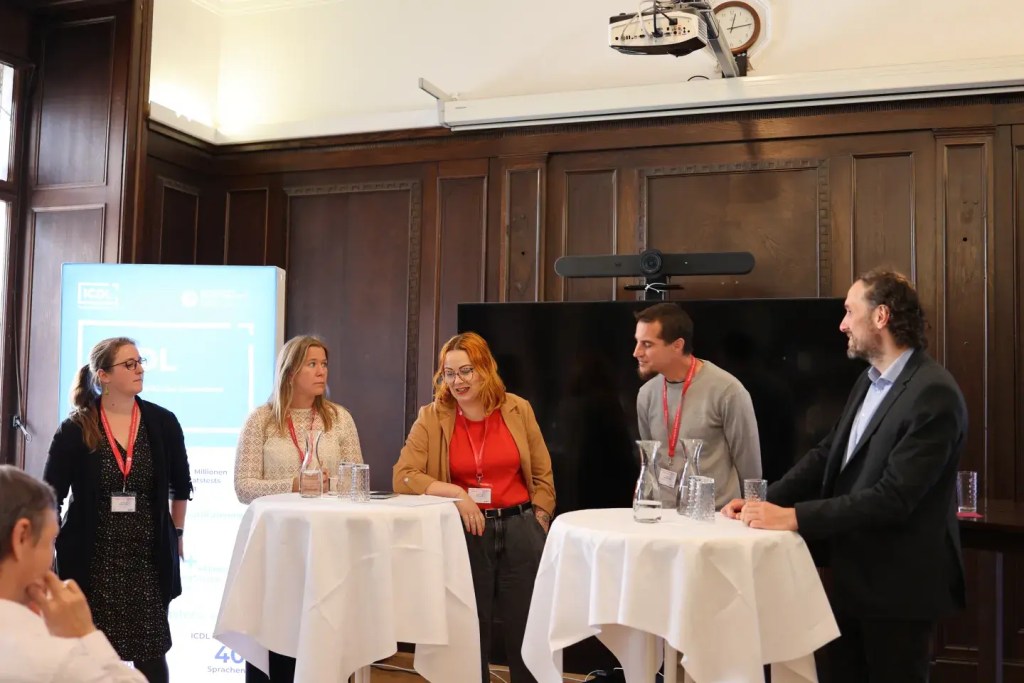
Panel: Student-Centred Education – Mental Health and Accessibility
Moderated by Maria Geir (Octenticity), the panel discussed the intersection of mental health, inclusion, and digital competence.
- Edith Hülber and Henrietta Loos stressed that inclusion must encompass teachers with disabilities and address the digital divide.
- Klaus Höckner highlighted that many disabilities are invisible and that ICT often excludes rather than includes. He called for accessibility from the start.
- Gerd Krizek warned against assuming young people are digitally skilled simply because they use devices.
Key messages:
- Technology must not become a gatekeeper.
- Inclusion is both ethical and economically smart.
- Teachers need targeted training in accessibility and digital skills.
- Standards like ICDL certification can ensure real digital participation.
Best Practices in Interdisciplinary Education
Martina Gaisch (University of Applied Sciences Upper Austria) addressed why the IT field loses so many girls. Barriers include negative stereotypes, lack of female role models, and uninspiring language. She advocated for:
- Reframing IT as creative and impactful
- Interdisciplinary learning
- Supportive male allies and inclusive language (e.g., “Creative Coding” instead of “Web Engineering”)
Beyond Buzzwords: Diversity in Practice
Verena Fuchsberger-Staufer (University of Salzburg) analysed how Maker Spaces often unintentionally exclude women due to social dynamics, noise, and lack of inclusion signals. She called for:
- Systemic change
- Clear inclusion cues
- Dedicated programmes like “Female Worker Month”
Long-Term Success: TU Wien’s Approach
Gerti Kappel (TU Wien) shared over a decade of successful strategies to increase the number of women in computer science through the formula:
Attract – Retrain – Promote – Sensitise
Initiatives included summer workshops, scholarships, and mandatory gender awareness training for staff. She underlined the importance of making computer science compulsory in upper secondary education and providing support structures like on-campus childcare.
Closing Message: Start from Kindergarten
Former Minister Maria Rauch-Kallat closed the morning with a heartfelt plea for gender-neutral education from early childhood. She warned that girls still often choose careers based on social values, overlooking financial independence. She advocated for learning from successful mentoring programmes like Club Alpha.
New Mentoring Programme Launch
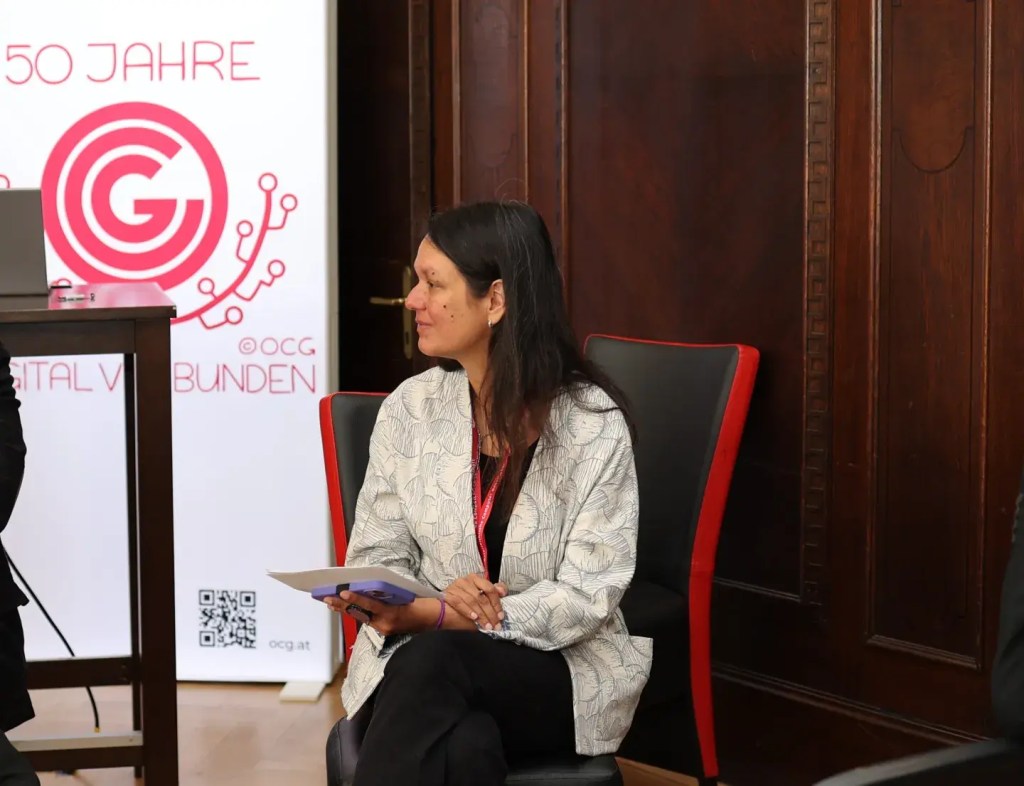
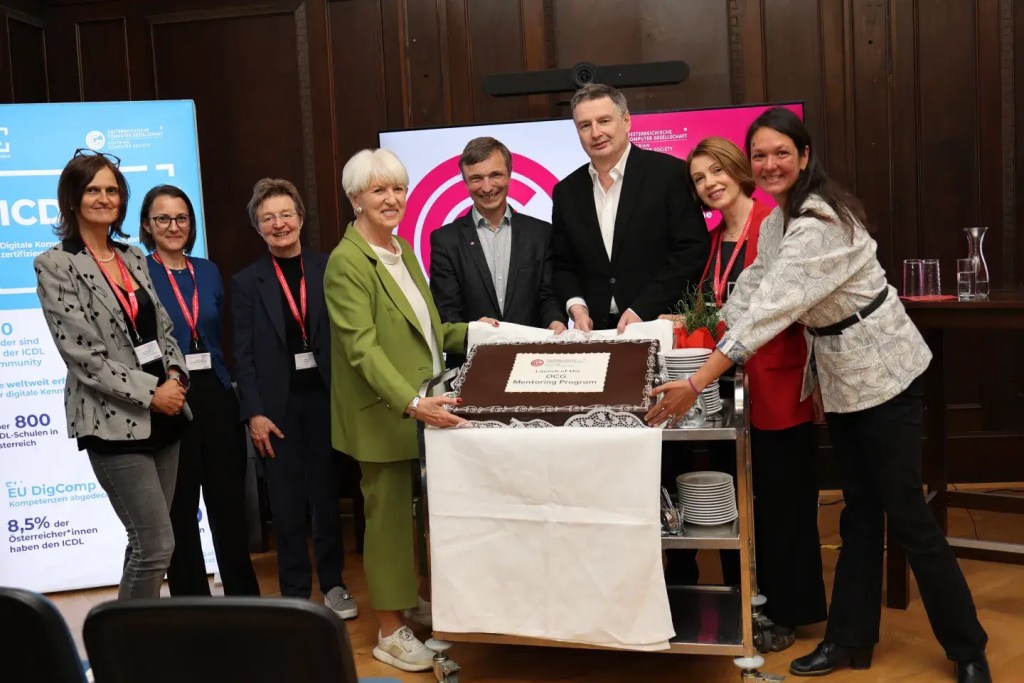
To conclude, Alexander Prosser (OCG) introduced a new OCG mentoring programme for women in master’s programmes and early careers in IT, pairing them with mentors from Austrian academia and industry for one year.


Session 2: Computing as a Foundation for Empowered Citizens
The second part of Day 1 of the symposium brought together academics, policymakers, and educators from across Europe to discuss the future of computer science education. Sessions highlighted best practices from countries like the UK, Slovakia, the Netherlands, and Denmark, all stressing the importance of early, inclusive, and interdisciplinary learning.
The Austrian panel acknowledged current challenges: late introduction of computing in schools, insufficient integration across subjects, and a need for practical, empowering approaches. Workshops and panel discussions reinforced that computing should be viewed as a fundamental skill for all citizens—not merely a technical subject.
Experts agreed that systemic reforms are needed: from better teacher training and compensation to accessible resources and strategic political action. Ultimately, digital maturity must begin early, be embedded across the curriculum, and align with broader societal goals.
Best Practices in Curriculum Design – The International View
- Irene Bell (UK/Northern Ireland)
Illustrated how the UK mandates computer science from age five. The curriculum promotes a journey from “Digital Citizen” to “Digital Maker,” emphasising cross-disciplinary learning. However, frequent curriculum changes and a shortage of qualified teachers pose significant challenges.
- Ivan Kalas (Slovakia)
Presented Informatics with Emil, a programme for young learners centred on creative and inquiry-based learning. It values reflection over rapid assessment and aims to integrate computing with other subjects emotionally and practically.
- Natasa Grgurina (Netherlands)
Shared efforts to design a new national framework for digital literacy. The Dutch focus is on timeless, conceptual knowledge rather than specific tools, aiming for inclusivity, continuity, and long-term relevance—despite teacher shortages.
- Michael E. Caspersen (Denmark)
Argued that computer science is a 21st-century core skill, as essential as reading and writing. He proposed DORIT (Do Your Own Research in Technology) to integrate digital maturity and reflection into all school subjects.
The Austrian Perspective – Computer Science and Empowered Citizens
Moderated by Corinna Hörmann (JKU Linz), the panel discussed how Austria is approaching computer science in schools.
- Rene Röpke (TU Wien)
Stressed the need to teach computer science earlier than Year 9 to nurture children’s interest in societal changes.
- Corinna Mößlacher (PH Carinthia)
Highlighted the insufficient teaching hours and lack of integration in non-ICT subjects. She called for research findings to be translated into classroom practices.
- Roderick Bloem (TU Graz)
Argued that computer science deserves equal footing with traditional school subjects.
- Markus Vesely (A-Trust)
Emphasised technical literacy as a civic necessity, particularly for using e-government services. Promoted awareness of free, accessible basic courses.
Conclusion: Computer science must be introduced earlier, integrated more broadly, and taught in a way that fosters real world empowerment.
Education in the Age of Automation
Interactive Workshop: Quo vadis education in times of automation?
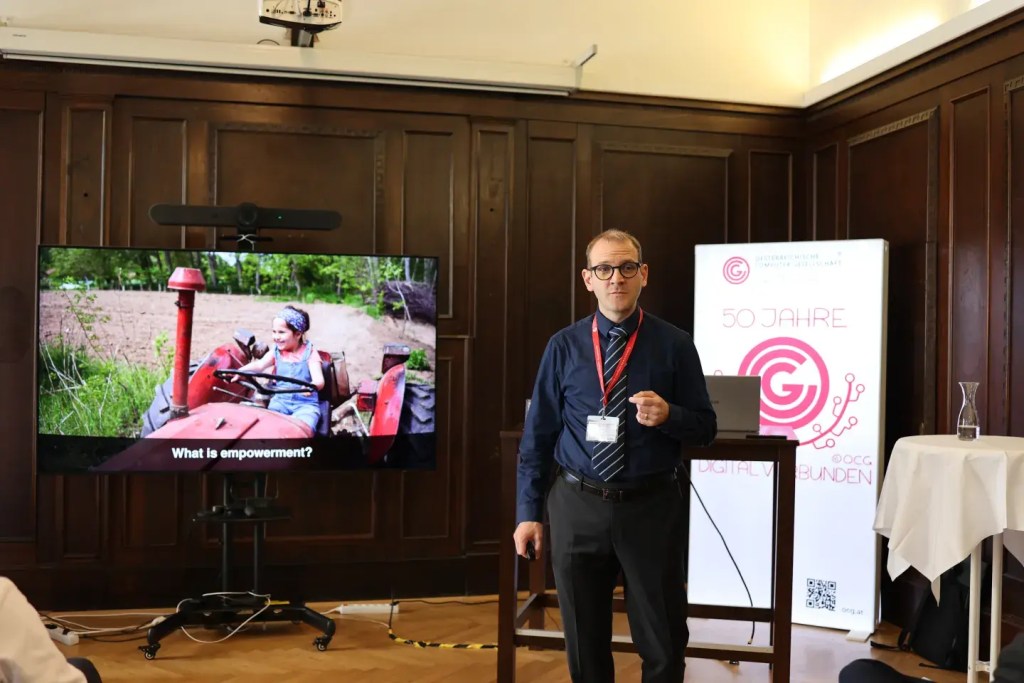
Moderated by Jakub Christoph (CEPIS), featuring Juraj Hromkovič from ETH Zurich. He described computer science as a branch of mathematics with three core principles: Data & Information – storing knowledge externally, Automation – codifying processes for others to follow, Technology – from ancient tools to modern computing.
Goal: Enable students to understand and shape the human-made world through computing, reinforcing language and maths skills.
Fireside Chat: Strengthening Digital Competence
Participants included Gerti Kappel (TU Wien), Michael E. Caspersen (Aarhus University), Fernando Suarez-Lorenzo (Spain), Martin Bauer (Austrian Ministry of Education), Karin Krichmayr (Der Standard).
Key Messages:
- Gerti Kappel: Computer science should be compulsory and not seen as a “nerdy” subject. Teachers deserve better pay, and there must be political commitment across party lines.
- Fernando Suarez-Lorenzo: Advocated for EU-wide competency frameworks and strategic planning. Spain lacks awareness and faces funding and staffing issues.
- Karin Krichmayr: Media often see overwhelmed teachers and a lack of transparency about students’ digital skills. Recommended real-life stories and playful initiatives like eduLAB.
- Martin Bauer: Digital education goes beyond coding; it must be integrated into everyday subjects and contexts.
- Michael Caspersen: Called for better teaching materials, cross-border collaboration, and bold political action.
General Consensus:
Digital education requires shared strategies, long-term investment, public visibility, and decisive implementation. Without swift action, Europe risks falling further behind globally.

Day 2: Computing – Empowerment in Action
The second day of the Computer Science in Education symposium focused on the role of computing in empowering individuals. It began with a visit to an innovative teaching lab and continued with compelling keynote addresses from European and academic leaders.
Speakers underscored the urgent need for digital skills and called for informed, reflective, and ethical engagement with technology—especially in light of myths around AI and computing. Discussions reinforced that computing is a core literacy and must be treated as such across Europe.
A thoughtful panel highlighted the need to redefine perceptions, support teachers with realistic training, and develop clear terminologies in digital education. The event concluded with student-led presentations, illustrating the next generation’s passion and creativity in shaping the digital future.
The day started with a guided tour of the eduLAB at TU Wien Informatics, led by Rene Röpke, Lukas Lehner, and Martina Landman. The lab showcased innovative learning environments and teaching concepts aimed at enhancing digital and computational skills.
Opening & Keynotes at the OCG Headquarters
Ronald Bieber (OCG Secretary General) officially opened the day’s programme at the OCG centre in Vienna.
Keynote: Leonie Bultynck, European Commission
In her keynote, Leonie Bultynck from the European Commission highlighted a pressing challenge: while 90% of jobs in the EU now require basic digital skills, only 56% of citizens possess them. Europe faces a significant shortfall of 20 million IT professionals, with a particularly acute shortage of qualified computing teachers. To address this, the European Commission is working on establishing a common terminology for informatics education and developing a high-quality teaching guide, set to be published in all EU languages by the end of the year. She pointed to Denmark and Finland as leading examples but emphasised that Europe as a whole remains behind. She also showcased Girls Go Circular as a concrete and successful initiative for digital empowerment.
Keynote: Tobias Kohn, Karlsruhe Institute of Technology
In his keynote titled Knowledge is Power, Tobias Kohn from the Karlsruhe Institute of Technology critiqued the buzzwords and myths often associated with artificial intelligence, urging a shift away from blind acceptance toward deeper understanding, reflection, and individual agency. He called for education that empowers young people to critically question and responsibly use technology, rather than passively consume it. Kohn warned that computing must serve societal needs—not just profit motives—and highlighted the ethical responsibility that computer scientists carry in shaping technology for the common good.
Keynote: Dennis Komm, ETH Zurich
In his keynote Informatics as Fundamental as Reading and Writing, Dennis Komm from ETH Zurich presented a spiral curriculum for programming that spans all school levels, emphasizing continuity and progression. He noted that in Switzerland, computer science is compulsory from kindergarten. Komm argued that schools should focus on empowering students to think independently rather than serving the interests of Big Tech. Even in an age of increasing automation, he stressed that understanding how digital systems work remains essential—just as reading is still crucial despite the ubiquity of word processors.
Panel Discussion: Barriers to Informatics Education
Moderator: Corinna Hörmann (JKU Linz)
Participants: Corinna Mößlacher (PH Carinthia), Leonie Bultynck, Rene Schwarzinger (ARGE Informatik), Bernhard Standl (PH Karlsruhe)
- Corinna Mößlacher: Many female students have negative associations with computer science. Educators must clarify what the subject truly is.
- Rene Schwarzinger: Highlighted the value of hands-on coding lessons.
- Bernhard Standl: Defined the essence of informatics education as structured problem-solving – the “spirit of computer science”.
- Leonie Bultynck: Warned of confusion caused by vague or overlapping terms—clarity and consistency in language are essential.
Takeaway:
Myths such as “CS is only for boys” or “using digital tools = CS” need to be debunked. Not every teacher must become a CS expert, but realistic, targeted professional development is key.
Closing Session: Young Researchers – Empowerment in Practice
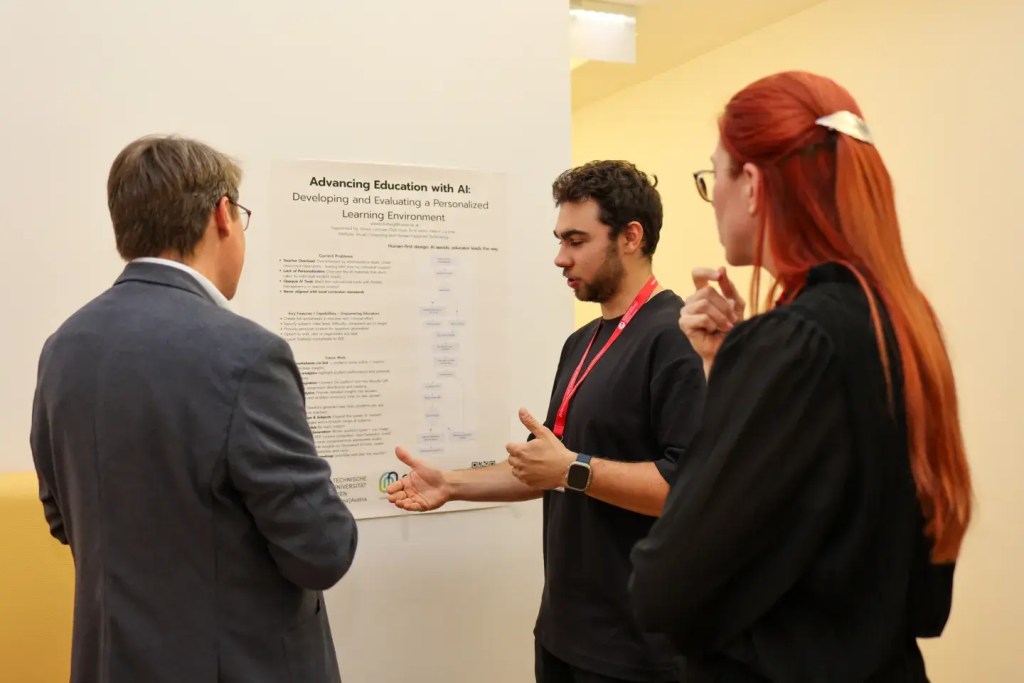
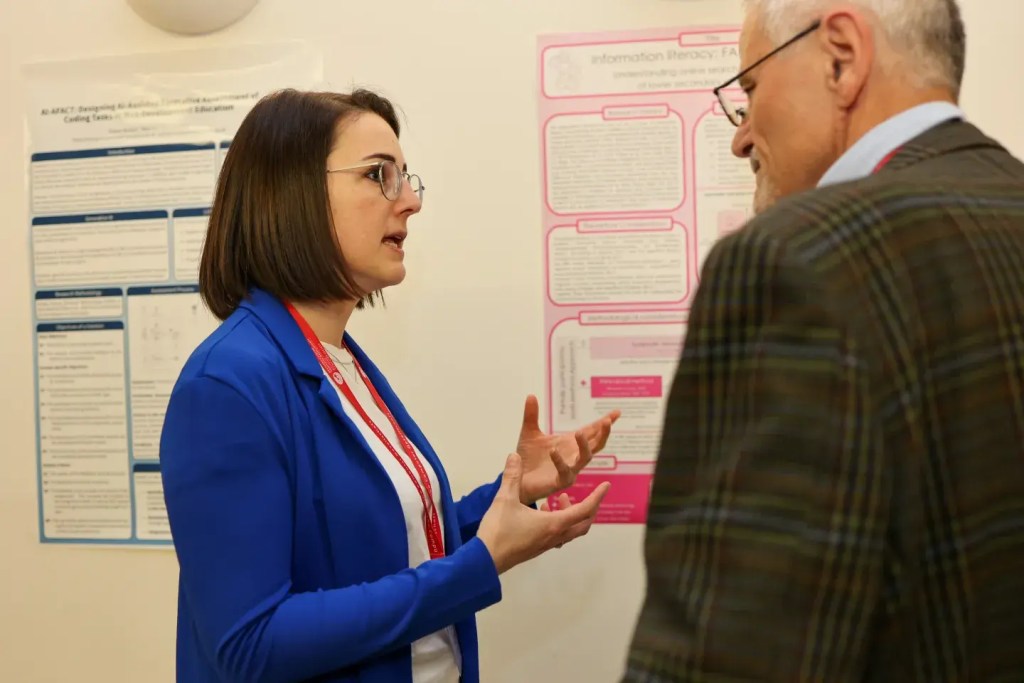
Moderated by Martin Kandlhofer (OCG), the final session of the 2-day event featured 10-minute project pitches by students, followed by a poster session and a networking reception. It showcased dynamic exchanges between researchers, educators, and guests, highlighting both the promise of emerging talent and the strength of collaborative engagement.
Photos from the event are available on OCG’s Flickr account.
You can also read the conference recap of all three sessions on OCG’s website (in German):